
Step One: Clear the Clutter and Define the Foundation
The absolute first mandatory step of your weekend styling project is ruthless physical decluttering and spatial definition. Before you even begin to consider hanging a single picture frame or purchasing a new decorative object, you must completely strip the chosen entryway wall down to its bare drywall. Remove every old adhesive hook, the broken umbrella stand, and the chaotic, towering pile of winter accessories. Once you have successfully established a clean slate, you must install the foundational anchor for the newly designed space. In a notoriously tight hallway, bringing in a heavy, solid wood credenza or a deep traditional dresser will instantly consume all available, precious floor space and make the entire room feel aggressively suffocating. Instead, interior designers recommend opting for a heavily streamlined, ultra-narrow metallic console table or, even better, a professionally wall-mounted floating wooden shelf. By physically lifting the structural furniture completely off the floor, you expose the bottom baseboards and allow the human eye to travel underneath the unit. This creates a powerful, highly effective optical illusion of vastly expanded square footage. This slim, floating surface provides just enough necessary room for a small ceramic catch-all tray for car keys and the mail, ensuring the space remains highly functional without inviting long-term clutter accumulation.
Step Two: Establish a Bold Focal Point with Artwork
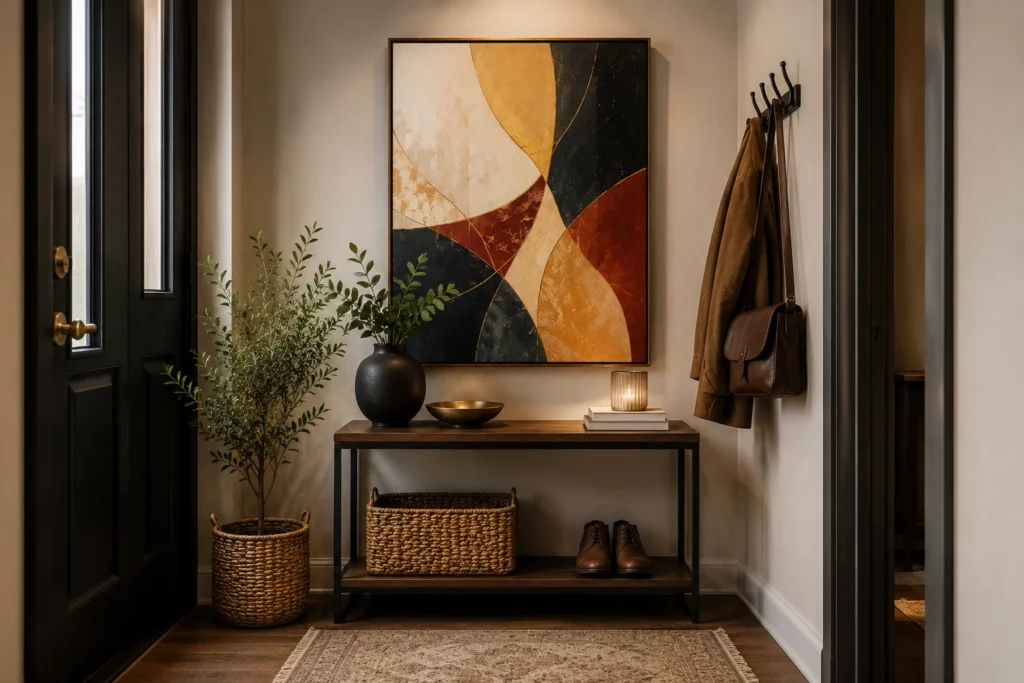
With your minimal architectural foundation securely and permanently established, the next critical phase of the weekend is injecting undeniable personality and establishing a massively dominant visual focal point. The most common and devastating aesthetic mistake people make in small entryways is attempting to create a busy, scattered gallery wall comprised of dozens of tiny, mismatched frames and family photos. This aggressive visual fragmentation makes a narrow hallway feel incredibly chaotic, heavily claustrophobic, and entirely disorganized. Instead, contemporary interior designers strongly advocate for the singular, massive impact of one oversized, carefully selected piece of fine art. Choosing expansive, vibrant Abstract Paintings for Hallway walls is the ultimate, proven strategy for instantly elevating the sophistication of the space. A large abstract canvas completely bypasses the need for a literal, easily recognizable narrative, instead relying entirely on sweeping color palettes, dynamic geometric forms, and rich physical texture to immediately capture attention. When an oversized abstract painting is hung perfectly centered, slightly above a floating shelf, it naturally and effortlessly draws the viewer’s eye rapidly upward toward the ceiling. This vertical visual movement effectively distracts from the narrow, restrictive width of the physical floorplan, making the entire entryway feel significantly taller, vastly more expansive, and infinitely more curated.
Step Three: Layering Lighting and Reflective Surfaces
Once your dominant artistic focal point is securely anchored to the drywall, the Saturday afternoon phase of your weekend project must strictly focus on strategic lighting and intelligent surface reflection. Small entryways are notoriously starved for natural sunlight, often relying entirely on harsh, highly unflattering overhead builder-grade ceiling fixtures that cast heavy downward shadows. To instantly create a warm, inviting, and highly expensive atmosphere, you must actively introduce layered, ambient lighting to the wall. Installing a pair of sleek, hardwired or battery-operated plug-in brass wall sconces directly flanking your large abstract painting completely eliminates those harsh overhead shadows and elegantly highlights the rich, thick texture of the painted canvas. Additionally, integrating a highly reflective surface is a non-negotiable requirement for opening up tight, windowless spaces. If your abstract art is the primary focal point on the main wall, consider placing a tall, extremely narrow, frameless mirror adjacent to it on a perpendicular side wall. The sleek mirror will actively catch the warm ambient light emitted from the new sconces, bounce it directly back across the narrow hallway, and artificially double the perceived depth of the corridor, ensuring the entryway feels incredibly airy and luminous rather than dark and cavernous.
Step Four: Adding Practical Yet Sculptural Hardware
The final Sunday step involves carefully integrating highly durable, architecturally beautiful hardware to handle the rigorous, unavoidable daily demands of a busy household. To ensure your newly styled wall remains pristine and perfectly organized, you must install designated hanging zones for heavy coats, dog leashes, and canvas tote bags that actually complement the high-end aesthetic you have just established. Reject cheap plastic command hooks at all costs and instead invest heavily in solid brass, matte black steel, or polished nickel architectural wall pegs. These elements must look exactly like intentional, high-end sculptural details when they are entirely empty, seamlessly blending with the modern, elevated artistic tone set by your dominant abstract artwork. To successfully execute this entire transformation before Monday morning, strictly follow this highly efficient, step-by-step weekend project checklist:
- Saturday morning: Completely empty the space, carefully patch any existing drywall holes with spackle, and securely mount your slim floating shelf directly into the wooden wall studs for maximum stability.
- Saturday afternoon: Carefully measure the remaining vertical space above the shelf and confidently hang your oversized abstract canvas to firmly establish the dominant aesthetic and colorful focal point of the room.
- Sunday morning: Install your modern ambient wall sconces on either side of the newly hung artwork and strategically position a tall reflective mirror on an adjacent wall to maximize optimal light distribution.
- Sunday afternoon: Carefully measure, drill, and secure high-quality, sculptural metal hooks for daily outerwear, ensuring they are spaced perfectly evenly to maintain strict, uncompromising visual harmony.
By systematically treating your small entryway not merely as a transitional, forgettable walkway, but as a highly deliberate, fully designed architectural destination, you completely change the psychological experience of returning to your home. The strategic, well-planned combination of a floating minimal surface, bold, large-scale abstract artwork, layered ambient lighting, and high-quality sculptural hardware creates a truly jaw-dropping visual impact. In just forty-eight hours of highly focused, intentional effort, you can permanently transform a frustrating, cramped drop-zone into a stunning, deeply welcoming foyer that immediately communicates exceptional personal taste and modern sophistication to absolutely everyone who crosses your threshold.
 Harriet Bellvovy, the visionary founder of Innov Art Foundry, has cultivated a platform that seamlessly bridges the traditional and modern aspects of the art world. Under her leadership, Innov Art Foundry has become a hub for the latest art news, keeping enthusiasts and professionals alike informed about significant exhibitions, breakthroughs, and emerging trends. Her commitment to fostering a vibrant art community is evident in the platform's comprehensive coverage, ensuring that artists and art lovers are always at the forefront of the dynamic landscape.
In addition to art news, Harriet Bellvovy has expanded Innov Art Foundry's focus to include art entrepreneurship, providing valuable insights for artists aspiring to turn their creative passions into thriving businesses. Her dedication to exploring diverse forms of artistic expression is further showcased in the platform's deep dive into tattoo art and the transformative role of virtual reality in the art world. Harriet's innovative approach continues to inspire and empower a new generation of artists, making Innov Art Foundry a vital resource in the contemporary art scene.
Harriet Bellvovy, the visionary founder of Innov Art Foundry, has cultivated a platform that seamlessly bridges the traditional and modern aspects of the art world. Under her leadership, Innov Art Foundry has become a hub for the latest art news, keeping enthusiasts and professionals alike informed about significant exhibitions, breakthroughs, and emerging trends. Her commitment to fostering a vibrant art community is evident in the platform's comprehensive coverage, ensuring that artists and art lovers are always at the forefront of the dynamic landscape.
In addition to art news, Harriet Bellvovy has expanded Innov Art Foundry's focus to include art entrepreneurship, providing valuable insights for artists aspiring to turn their creative passions into thriving businesses. Her dedication to exploring diverse forms of artistic expression is further showcased in the platform's deep dive into tattoo art and the transformative role of virtual reality in the art world. Harriet's innovative approach continues to inspire and empower a new generation of artists, making Innov Art Foundry a vital resource in the contemporary art scene.