
A painting can change the mood of a room. A mural can give a street corner a new identity. And a thoughtful art collection can help people imagine what a building might become. The relationship between art and real estate runs deeper than decoration: both are concerned with space, memory, value, and the way people feel in a place.
For artists, curators, and creative businesses, that overlap offers more than inspiration. It creates opportunities to collaborate with property professionals and to tell stories to audiences who may not usually seek out art coverage. The key is to treat the built environment as a subject in its own right, rather than using art as a finishing touch.
Look Beyond the Staged Room
Interior photography often presents art as a prop: a canvas above the sofa, a sculpture on a console, a color accent chosen to complete the palette. But the most interesting projects begin with a question: what does this work contribute to the experience of the space?
A local artist’s work can connect a development to its neighborhood. A collection assembled around a building’s history can give residents and visitors a sense of continuity. Site-specific work may respond to a building’s materials, light, or architecture in ways that a standard print cannot. Even temporary installations can invite people to see a familiar property differently.
That perspective also makes for stronger storytelling. Rather than describing an artwork as “the perfect finishing touch,” explain why it belongs there. Who made it? What local references does it carry? How does it change as daylight moves through the room? Specific details give readers a reason to care.
Build Collaborations Around Shared Goals
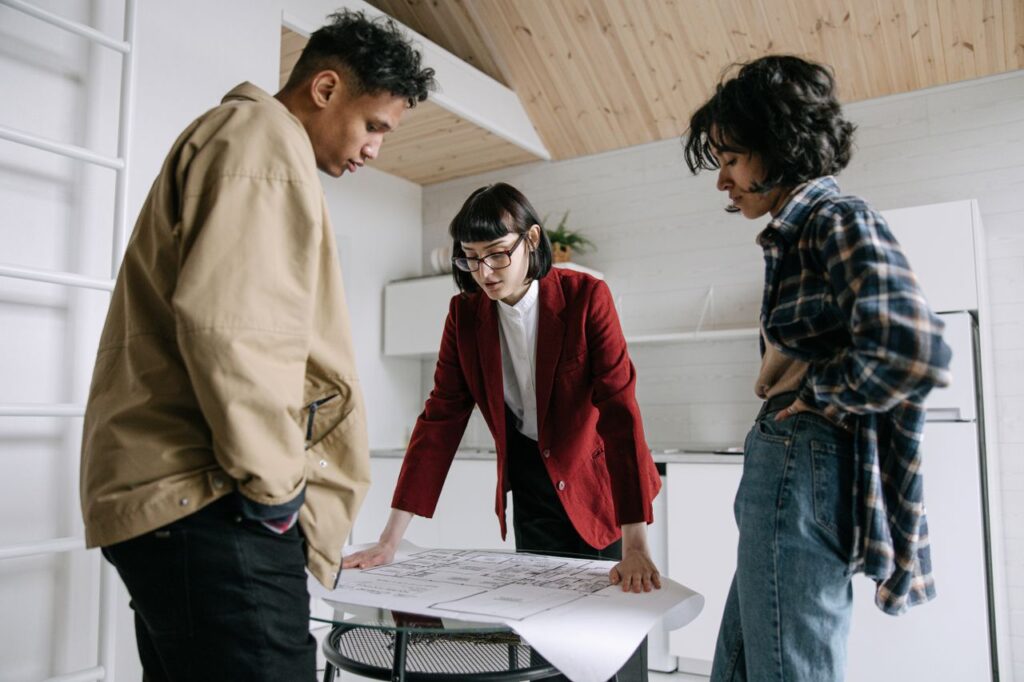
Artists and property professionals do not always begin with the same priorities. A developer may be focused on public use, durability, budgets, and schedules. An artist may be thinking about materials, meaning, and creative control. A successful partnership makes room for both sets of concerns from the outset.
Before work begins, agree on the practical details: the project’s purpose, the audience, the available budget, installation and maintenance responsibilities, and how the artist will be credited. For public-facing work, discuss permissions and the expected lifespan of the piece. If a building is renovated or sold, establish what happens to work that cannot easily be moved.
These conversations are not bureaucracy getting in the way of creativity. They protect the creative work and help it function in its actual setting. A sculpture exposed to weather, for example, needs a different material plan from one displayed in a private lobby.
Tell Place-Based Stories Online
Digital content can bring these collaborations to people who never visit the property in person. A useful article might follow the making of a mural, introduce artists commissioned for a new building, or explore how a historic structure is being adapted for contemporary use. Strong coverage gives readers context, not just polished photographs.
For artists and creative studios, publishing on relevant property websites can also put their work in front of audiences interested in interiors, architecture, investment, and neighborhood development. The best fit is editorial: a useful story that serves the publication’s readers while showing how art changes the way a place is understood. A directory of real estate guest-posting opportunities can help writers identify property-focused sites that accept contributed articles.
Pitch a clear idea rather than a broad request for exposure. For example, propose a practical piece on commissioning durable art for shared spaces, or a case study about a community-led project. Include a concise outline, relevant images if requested, and accurate information about the artists and property. Editorial value should lead; promotion should not be the whole point.
Make the Creative Process Sustainable
Good collaboration takes time, and small creative teams may need help with the work around the work: editing, photography, illustration, animation, or adapting a story for different formats. Matching support to the actual task can make a project easier to manage without giving up the artist’s voice.
A freelance marketplace such as Osdire brings together services across categories including writing, graphic design, photography, and video. Its flat pricing and payment-hold process may be useful to buyers planning a defined assignment: funds are held while the order is underway and released after the delivered work is approved. Clear briefs and agreed deliverables still matter, whether the task is a photo edit or a full article.
When bringing in a freelancer, share the project’s audience, tone, timeline, and rights requirements before work starts. For images, clarify usage and credits. For writing, provide verified facts and let the writer know what can be quoted. These basics reduce revisions and preserve the integrity of the project.
Let the Place Stay Visible
Art can make a property more memorable, but the strongest work does not erase the place around it. It responds to the people who use the space, the history already present, and the possibilities ahead. That might mean a bold installation in a new public square or a modest collection chosen with care for a shared hallway.
For artists, the opportunity is to see buildings not merely as walls to fill, but as settings for relationships and stories. For property professionals, working with artists can bring character and local meaning into spaces that might otherwise feel interchangeable. When each side is treated as a partner, the result can be more than attractive: it can help people feel that a place belongs to them.
 Harriet Bellvovy, the visionary founder of Innov Art Foundry, has cultivated a platform that seamlessly bridges the traditional and modern aspects of the art world. Under her leadership, Innov Art Foundry has become a hub for the latest art news, keeping enthusiasts and professionals alike informed about significant exhibitions, breakthroughs, and emerging trends. Her commitment to fostering a vibrant art community is evident in the platform's comprehensive coverage, ensuring that artists and art lovers are always at the forefront of the dynamic landscape.
In addition to art news, Harriet Bellvovy has expanded Innov Art Foundry's focus to include art entrepreneurship, providing valuable insights for artists aspiring to turn their creative passions into thriving businesses. Her dedication to exploring diverse forms of artistic expression is further showcased in the platform's deep dive into tattoo art and the transformative role of virtual reality in the art world. Harriet's innovative approach continues to inspire and empower a new generation of artists, making Innov Art Foundry a vital resource in the contemporary art scene.
Harriet Bellvovy, the visionary founder of Innov Art Foundry, has cultivated a platform that seamlessly bridges the traditional and modern aspects of the art world. Under her leadership, Innov Art Foundry has become a hub for the latest art news, keeping enthusiasts and professionals alike informed about significant exhibitions, breakthroughs, and emerging trends. Her commitment to fostering a vibrant art community is evident in the platform's comprehensive coverage, ensuring that artists and art lovers are always at the forefront of the dynamic landscape.
In addition to art news, Harriet Bellvovy has expanded Innov Art Foundry's focus to include art entrepreneurship, providing valuable insights for artists aspiring to turn their creative passions into thriving businesses. Her dedication to exploring diverse forms of artistic expression is further showcased in the platform's deep dive into tattoo art and the transformative role of virtual reality in the art world. Harriet's innovative approach continues to inspire and empower a new generation of artists, making Innov Art Foundry a vital resource in the contemporary art scene.